Leadership Briefing: Making the Case for a Digital-First Mission
Thirty minutes with the MMDM board: Costa Rica reviewed, a 12-item BoM tabled, HIPAA strategy presented, and a platform direction proposed. Five asks. Here is what was on the table.

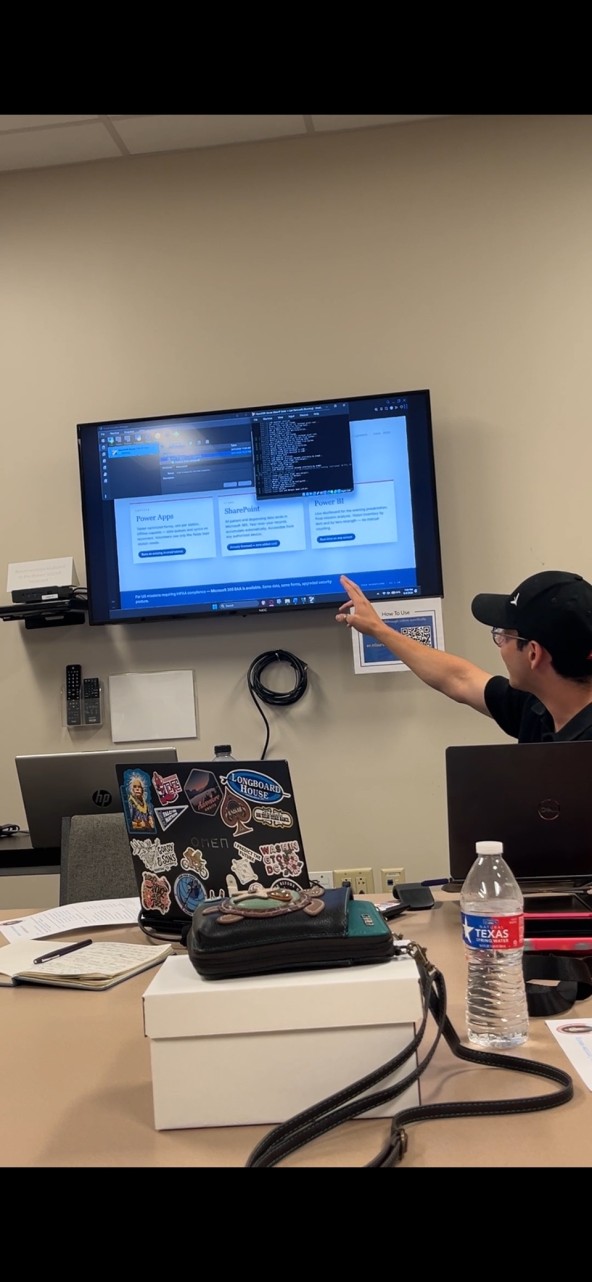
The Meeting
On June 4, 2026, I presented a 30-minute briefing to MMDM leadership. The agenda covered six areas: what was built before Costa Rica, what happened during the deployment, the updated Bill of Materials, why Laredo is operationally different, a HIPAA strategy, and a technology direction recommendation. The session included a live EMR demonstration and closed with five asks requiring leadership decisions.
The room carried the same energy it always does with this group: warm on the surface, precise underneath. These are clinicians and mission veterans. They listen the way they examine patients, quietly and completely, with visible attention and no wasted reaction. Roberto opened the floor and stepped back. Everyone gave me the space to run through the full arc, from the server architecture to the patient-creation bug to the platform pivot, without interruption. The support has never been performative. It shows up as focus.
What Was Presented
Pre-mission foundation. The briefing opened with the infrastructure built in the three months before Costa Rica: the hardened Ubuntu server, private CA and HTTPS, VirtualBox snapshot strategy, UFW firewall, eight station accounts provisioned by role, and form specifications drafted against the paper originals.
Costa Rica findings. Deployment went to plan. The network held at every fixed station. The observation work — site walkthrough, coverage mapping, on-ground interviews, and a structured post-mission survey — produced 14 substantive responses from 38 volunteers. Every form change presented in the meeting was sourced directly from that dataset.
The rebuild. The patient-creation bug and the on-mission OpenEMR reset were presented transparently. The cause, the failed patches, the decision to rebuild from scratch, and the outcome. No blockers remain.
The Bill of Materials. A 12-item equipment list was tabled for approval, sourcing everything from documented Costa Rica gaps or new Laredo requirements: additional indoor APs, a larger switch, pre-measured cable runs, a Starlink extension, AP wall mounts, cable management hardware, 13 Android tablets with charging hub, a firewall appliance, stylus pens, screen protectors, and a NAS for shared photo and document access on the clinic LAN.
Laredo. Five concrete differences from Costa Rica: HIPAA jurisdiction, a street physically separating registration from the clinical buildings, a different patient population without Cedulas, Catholic Charities intake handoff, and a real referral network (Webb County, Gateway, Prevent Blindness Texas).
HIPAA strategy. The paper-first hybrid was presented as the Laredo plan: paper capture at point-of-care during the mission, post-mission transcription in a controlled environment, with the long-range target of a fully digital HIPAA-aligned Costa Rica April 2027. The case made: the downside of rushing compliance is the mission itself. Leadership endorsement of the hybrid model was ask four.
Recruiting. Three streams: the Microsoft Forms skill-assessment questionnaire (live), campus pamphlets for Houston-area colleges (in production), and career fairs (calendar in progress).
The Platform Direction
The most significant part of the meeting was not on the original agenda. It was a recommendation I put in front of the board: that the volunteer-facing form layer — the actual forms station leads fill out during a mission — should move from OpenEMR to Microsoft Power Apps.
The case: everything MMDM needs to collect data, store it year-over-year, and analyze it in real time is already inside the Microsoft 365 licenses the organization holds. Power Apps on a tablet gives each station exactly the fields it needs and nothing else. SharePoint stores every submission automatically. Power BI can show patients-per-station and glasses-dispensed-by-strength by dinner on day one.
The OpenEMR infrastructure — the server, the database, the backups, the security architecture — stays. What changes is the interface volunteers touch at point of care.
This was presented as a recommendation for board input, not a done decision. If endorsed, it changes the form-build roadmap for Laredo.
There was no resistance to dropping OpenEMR. The case against it built itself in the room. Five minutes of live demonstration covered the full picture: booting the VM on a laptop that would eventually need a permanent home, the friction of editing a basic demographic field, and a UI that looks genuinely foreign to anyone shaped by modern software. For a volunteer team where the most experienced members have been doing this for 26 to 32 missions and range into their seventies and eighties, that complexity is not a minor inconvenience. It is a real barrier.
The questions from leadership were practical and direct. Would Power Apps capture everything OpenEMR would have? Yes, and more, with faster turnaround on analysis, meaning day-to-day results could be reviewed during the mission rather than weeks after it. Would volunteers be able to learn it? Faster than OpenEMR, with no multi-night training sessions, no lockout procedures to memorize, no tab-navigation gotchas. The timeline was also raised, and the answer surprised the room: the build may come together faster than finishing the OpenEMR form set would have.
The relief was visible. Not just approval, but the specific kind of relief that comes when a problem that was quietly worrying people turns out to have a cleaner answer than anyone expected. I lost the room briefly a few times on acronyms and technical language, but it did not matter by the end. What landed was the substance: months of work, honest testing, and a recommendation that came from evidence rather than preference. Leadership endorsed pursuing Power Apps as the next step, with the understanding that the form-build work itself would determine whether it held up in practice. As Technical Operations Lead, the trust placed in that judgment call was real.
Patient Safety
Two items from the post-mission survey were raised as patient safety issues, not form issues. First: a patient was transported to the hospital mid-mission and the ambulance arrived hours late and refused transport. There is no emergency protocol and no pre-mission MOU with local emergency services. This was named from the podium as an executive action item requiring an owner and a date before Laredo. Second: the dental sterilization bleach concentration was unverified — chlorine test strips on the pre-mission checklist, every time. A two-dollar fix.
The Five Asks
1. Approve BoM sourcing within 30 days. Return with a cost figure after the Laredo site survey. 2. Introduction to Linda (dental form authority, via Cathy Short) — before July. 3. Introduction to Dr. Carol Gambrill (Laredo dental and referrals, via Dr. Byrd) — before July. 4. Written leadership endorsement of the paper-first HIPAA hybrid for Laredo. 5. Support for the three-channel recruiting plan, including campus network introductions where available.
The BoM received broad informal support. The core hardware list, tablets, charging hub, additional cabling, extra APs, stylus pens, and cases, landed without resistance. The NAS remains unresolved. It was not rejected, but it did not generate the same consensus. It reads as a quality-of-life item to the room rather than a mission dependency, and will need either a stronger argument or a dedicated donor before it moves forward.
The dental form introduction is still pending. The updated paper form is the working reference. The plan is to build the LBF against it, then strip fields based on Linda's input once the introduction comes through via Cathy Short. That remains on the pre-July timeline.
The Dr. Gambrill introduction did not happen during the meeting. It will be coordinated offline through Dr. Byrd on a timeline still to be confirmed.
The HIPAA question resolved more decisively than a simple deferral. The decision out of the meeting is to pull back the technology push from US missions for the near future. HIPAA compliance at Laredo scale is not a one-person operation, and with a new job and UCF starting in August, carrying that liability without adequate support is not the right position to be in. The paper-first model stays. The long-range digital track for Laredo is on hold until the team has the capacity to do it correctly.
Recruiting closed as a clear positive. The committee does not have the internal numbers to drive organic growth yet, and that was stated plainly. What is in motion: the interest form is live, the campus pamphlet is in production for Houston-area colleges, and the career fair concept generated real interest, specifically the possibility of reaching a volunteer profile that Cafe Catholica Lite does not. The plan is to identify one fall event, measure conversion against existing channels, and decide whether the table cost justifies a recurring commitment. A follow-up email with fall and spring and summer event calendars is on the send list.